
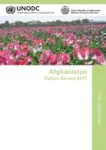

| Titre : | 2011 |
| Titre de série : | Afghanistan opium survey |
| Auteurs : | ONUDC / UNODC |
| Type de document : | Rapport |
| Editeur : | Vienna : UNODC, 2012 |
| Format : | 119 p. / ill., graph., tabl. |
| Langues: | Anglais |
| Discipline : | MAR (Marchés / Markets) |
| Mots-clés : |
Thésaurus mots-clés ENQUETE ; OPIUM ; GEOGRAPHIE ; PRIX ; SECURITE ; PRODUCTION ; ECONOMIE ; EVOLUTIONThésaurus géographique AFGHANISTAN |
| Résumé : |
The Afghanistan Opium Survey is implemented annually by the United Nations Office on Drugs and Crime (UNODC) and, since 2003, in collaboration with the Afghan Government. The survey team collects and analyses information on the location and extent of opium cultivation, potential opium production and the socio-economic situation in rural areas. As well, since 2005, UNODC has been involved in the verification of opium eradication conducted by the Government. The results provide a detailed picture of the outcome of the current year's opium season and, together with data from previous years, portray medium and long-term trends in the evolution of the illicit drug problem. This information is essential for planning, implementing and monitoring the impact of measures required for tackling a problem that has serious implications for Afghanistan and the international community. The 2011 survey received financial contributions from the Governments of Germany, Norway, the United Kingdom, and the United States of America.
In 2011, several troubling trends emerged. The foremost was the dramatic increase in the value of the opium economy. In 2010, major opium-cultivation areas were affected by plant diseases which led to a large yield reduction (29.2 kg/ha). In 2011, opium yields were back to “normal” levels of 44.5 kg/ha. When compared to 2010, opium production increased by 61% from 3,600 mt in 2010 to 5,800 mt in 2011. However, as with other scarce commodities, the greatly reduced supply of fresh opium from the 2010 harvest time triggered a spectacular rise in opium prices. Between 2009 and 2010, dry opium prices at harvest time increased to US$ 169/kg from US$ 64 in 2009, a jump of 164%. This increase continued until the first quarter of 2011 when prices began to level off. Between 2010 and 2011, dry opium prices at harvest time increased to US$ 241 from US$ 169/kg, a jump of 43%. [Extract] |
| Domaine : | Drogues illicites / Illicit drugs |
| Affiliation : | Austria |
| Lien : | http://www.unodc.org/unodc/en/crop-monitoring/index.html?tag=Afghanistan |
Exemplaires
| Disponibilité |
|---|
| aucun exemplaire |
 Accueil
